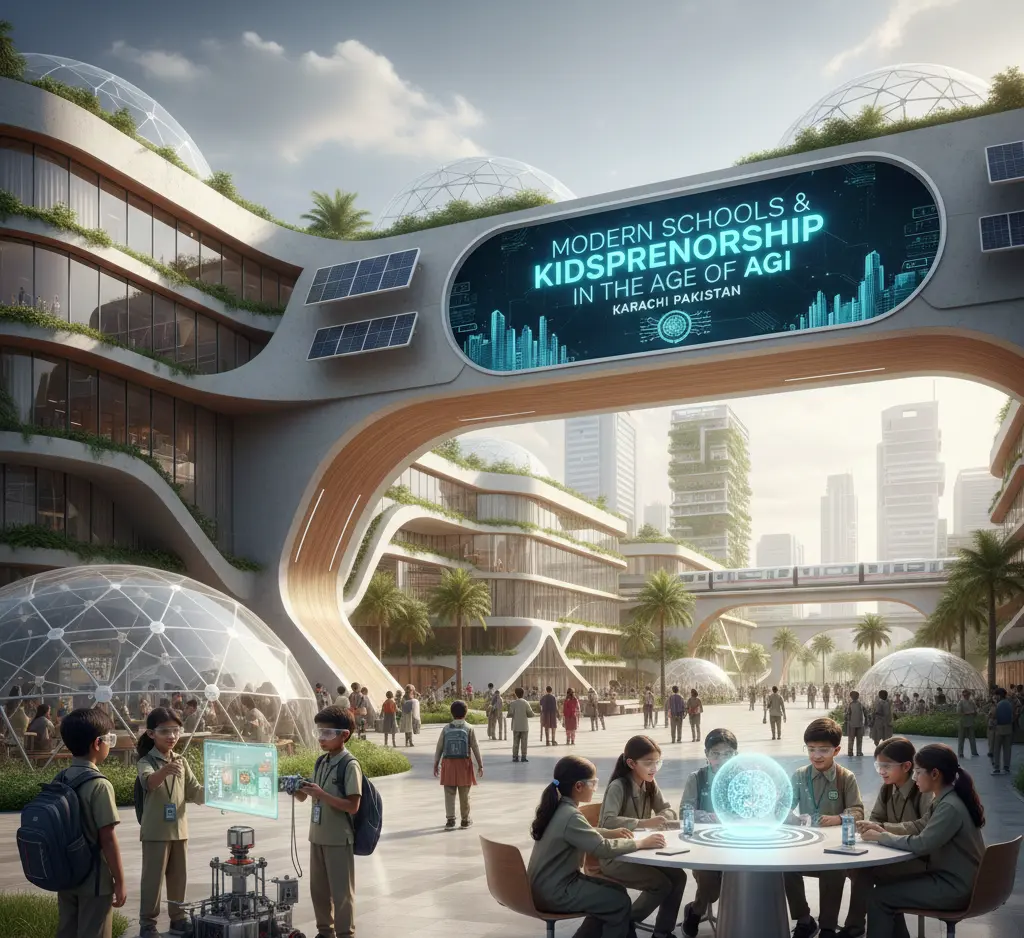
Modern Schools & Kidspreurship in the Age of AGI After 2030
Published: January 26, 2026
Introduction
The education sector is at a pivotal juncture. Rapid advancements in Artificial General Intelligence (AGI) and digital technologies demand systemic reforms in how schools prepare students for an evolving world. Traditional curricula centred on memorization and standardized testing are increasingly misaligned with labor markets that will value innovation, problem-solving, and entrepreneurial mindsets.
Global Trends & Projections
The integration of AI in education is expanding rapidly. The AI in education market, valued at USD 5.47 billion in 2024, is projected to exceed USD 112 billion by 2034, driven by personalized learning, adaptive content delivery, and intelligent tutoring systems. This growth underscores the sector’s transformation from conventional instruction to data-driven, student-centric learning environments. Codegnan
By 2030, AI tools are expected to support 75% of global students through adaptive learning platforms that tailor pathways based on individual interests and abilities. AI-driven assessments could account for 50% of all testing by 2035, significantly reducing administrative burdens and enabling educators to focus on mentorship and creative projects. SEO Sandwitch
The World Economic Forum’s Future of Jobs Report projects that by 2030, 170 million new jobs will be created even as 92 million roles are displaced, highlighting the necessity of equipping students with entrepreneurial skills, digital literacy, and AGI fluency. AI for Education
Why Schools Must Reform Now
Educational institutions must shift from purely academic outputs toward enterprise-oriented learning frameworks that cultivate kidspreurship — the ability of children to ideate, prototype, and commercialize solutions. Embedding entrepreneurial competencies across the curriculum lays the foundation for:
- Homepreneurship: nurturing household-based innovation and micro-enterprise.
- Agripreneurship: leveraging agricultural knowledge and sustainable practices as business opportunities.
- Digipreneurship: empowering students to launch digital ventures, apps, and AI-enabled solutions.
Curricula that integrate entrepreneurship principles have demonstrated significant impact. Pilot programs embedding entrepreneurship in secondary schools have shown up to 25% reductions in youth unemployment, while cultivating resilience, creativity, and economic agency among learners. Maarco Francis | Official Website
A Strategic Path Forward
For meaningful reform, education leaders must:
- Integrate AGI literacy and practical AI applications into core curricula.
- Establish innovation labs, start-up incubators, and project-based learning hubs within schools.
- Partner with EdTech, industry, and community stakeholders to provide real-world entrepreneurial exposure.
- Prioritize skills-based outcomes — critical thinking, collaboration, ethical reasoning, and adaptive learning.
Conclusion
Education systems that embrace this paradigm will empower students not just to enter the future economy, but to lead it. By fostering kidspreurship, AGI literacy, and innovation-driven learning, modern schools can cultivate the next generation of thinkers, creators, and leaders ready for the post-2030 world.
Written By
Prof Nadeem Ahmed Faraz
Chairman PERTC Pakistan Economic Research & Training Centre
Chairman PYEC Pakistan Young Entrepreneurs Club
Chairman The Innovators Schooling System
Training & Policy Development Head YCCP Youth Chamber of Commerce Pakistan
Founder Chairman Global Economic, Finance & Research Forum
CEO Next Level Management Solutions
Convener Research & Initiatives Committee PAEC Pakistan Africa Economic Council